

Unlocking the Color Rendering Index of Lamps: The Color Code for Illumination

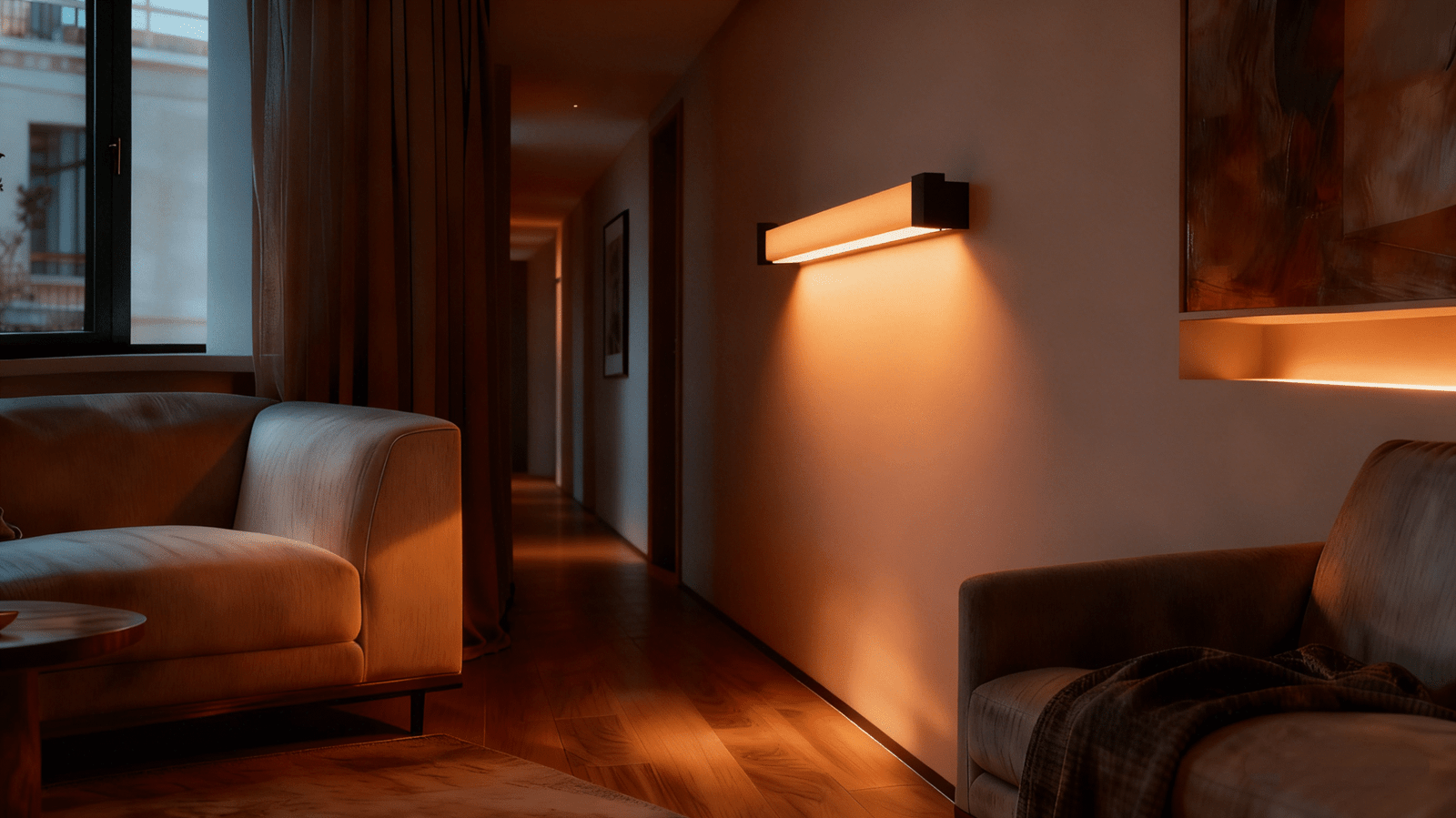
The Color Magic of Light: First Impressions of Color Rendering Index
Have you ever had such experiences: a red shirt chosen under bedroom lighting turns into an orange-tinged hue under natural light? Or fresh-looking ingredients in a restaurant appear dull and lackluster when the lighting changes? At the core of these differences is the “Color Rendering Index” (CRI). It is invisible and intangible, yet it directly determines whether light can truly restore the original color of objects, making it one of the key indicators for measuring lighting quality.
Color Rendering Index: Definition and Measurement Standards
(I) What is Color Rendering Index
The Color Rendering Index (CRI) is a measurement index developed by the International Commission on Illumination (CIE) to quantify the ability of light to restore the “standard color” of objects. Its core logic is: taking natural light (or standard white light) as the reference (with a CRI defined as 100), compare the color difference of the same object under the tested light and the reference light. The smaller the difference, the higher the CRI value, and the more realistic the color rendering effect.
For example, a lamp with a CRI of 90 can restore 90% of the original color of an object; while a lamp with a CRI lower than 70 will cause saturated colors such as red and green to “fade” significantly. For instance, it may make bright green leaves appear gray-green and ripe strawberries look dark red.
(II) Key Indicators: RA and R9
·RA (General Color Rendering Index): The “CRI value” we often refer to mostly means RA. It is obtained by testing the color rendering effect of 8 common “standard color cards” (such as skin tone, sky blue, leaf green, etc.) and taking the average. The range of RA is also 0-100. Generally, it is considered that: RA ≥ 90 is “high color rendering”, suitable for scenarios with high requirements for color restoration; 70 ≤ RA < 90 is “medium color rendering”, applicable to ordinary daily lighting; RA < 70 is “low color rendering”, only suitable for scenarios with no color requirements such as warehouses and corridors.
·R9 (Red Color Rendering Index): It is a “supplementary indicator” of RA, specifically measuring the ability of light to restore “saturated red”. Since high-saturation red is not included in the RA calculation, some lamps with RA ≥ 80 may have a negative R9 value (meaning they cannot restore red at all). For example, in a clothing store, if the R9 of the lamp is low, red clothes will look dull; in front of a makeup mirror, insufficient R9 will cause a deviation between the lipstick color and the actual skin tone matching effect. In these scenarios, it is necessary to focus on R9 ≥ 50 (the ideal state is R9 ≥ 80).
Market Standards and Requirements for Lamp Color Rendering Index
(I) Relevant Regulations and Standards
Currently, the requirements for color rendering index in major global markets mostly refer to the standards of the International Commission on Illumination (CIE) and national energy efficiency regulations:
·EU “Ecodesign Directive” (ErP) requirements: RA ≥ 80 for indoor household lamps; RA ≥ 90 for lamps in commercial places (such as stores and restaurants); professional places such as museums and art galleries need to meet RA ≥ 95 and R9 ≥ 90.
·US ENERGY STAR certification: Indoor lighting products must meet RA ≥ 80, and some specific categories such as decorative lamps and reading lamps require RA ≥ 90.
These standards are not “mandatory thresholds”, but they affect the market access and consumer trust of products. Products with low RA values are hardly able to enter the mid-to-high-end market.
(II) Applicable Standards in Different Scenarios
·Home Scenarios: Bedrooms (for makeup and dressing), kitchens (for judging the freshness of ingredients), and living rooms (for displaying decorative paintings and furniture colors) require RA ≥ 90 and R9 ≥ 50; for secondary areas such as balconies and corridors, the requirement can be relaxed to RA ≥ 70.
·Commercial Scenarios: Clothing stores and cosmetics stores require RA ≥ 95 and R9 ≥ 80 (to ensure the true color of products); restaurants require RA ≥ 90 and R9 ≥ 60 (to enhance the color of food and stimulate appetite); museums and art galleries require RA ≥ 97 and R9 ≥ 90 (to restore the detailed colors of artworks).
·Industrial/Office Scenarios: Quality inspection workshops in electronics factories require RA ≥ 90 (to identify color differences of parts); offices require RA ≥ 80 (to reduce visual fatigue caused by long-term viewing of color cards and screens); for scenarios such as warehouses and garages, RA ≥ 60 is sufficient to meet basic lighting needs.
The Impact of Color Rendering Index on Life and Work
(I) Color Perception in Home Life
Lamps with high color rendering index can directly improve the quality of life: In the kitchen, they can make fresh meat show a natural pink color (instead of dark red) and make vegetables look brighter green, making it easier to judge the freshness of ingredients; in front of the bedroom makeup mirror, lights with RA ≥ 90 can restore the subtle color differences of skin tone, avoiding the embarrassment of “looking too white or too dark when going out after applying makeup indoors”; in children’s rooms, high color rendering lights can help children recognize colors more accurately, such as distinguishing between “lemon yellow” and “earth yellow”, which is more friendly to visual development.
(II) Importance in Commercial and Work Scenarios
For commercial scenarios, the color rendering index is directly related to “user experience” and “business results”: In retail stores, high color rendering lights can highlight the texture of clothing and jewelry. According to research, compared with stores with RA = 70, the average customer stay time in stores with RA ≥ 95 increases by 20%, and the purchase conversion rate increases by 15%; in office scenarios, lights with RA ≥ 80 can reduce work errors caused by color deviations (such as wrong color values in the design industry and missed color differences in the quality inspection industry), and at the same time reduce visual fatigue, with an average increase of 8% in employee efficiency.
How to Choose Lamps with High Color Rendering Index
(I) The Relationship Between Lamp Types and Color Rendering Index
Lamps with different light sources have inherent differences in color rendering index:
· LED Lamps: Currently the mainstream choice, with customizable color rendering index (ranging from RA = 60 to RA = 98). However, it should be noted that “low power consumption ≠ high color rendering” – some low-cost LED lamps sacrifice color rendering to pursue brightness, so it is necessary to focus on parameters.
·Incandescent Lamps: Naturally high color rendering (RA ≈ 100, R9 ≈ 100), but with high energy consumption and short service life (only about 1000 hours), they have gradually been replaced by LED lamps.
·Fluorescent Lamps: Traditional fluorescent lamps have a low color rendering index (RA ≈ 60-70) and contain mercury; new tricolor fluorescent lamps can reach RA ≥ 80, but they are still not as flexible as LED lamps and are mostly used in large office spaces.
(II) Key Points and Skills for Purchase
1.Check the Parameter Table: Prioritize products clearly marked with “CRI (RA) ≥ 90” and “R9 ≥ 50”, and avoid vague descriptions that only mark “high color rendering” without specific values.
2.Check Certification Marks: Products with certifications such as EU CE, US ENERGY STAR, and China CQC have more reliable color rendering index parameters and are less likely to have false markings.
3.On-site Testing (if possible): Bring a high-saturation color card (such as red and green card paper) and compare the colors under the lamp. If the difference from natural light is small, it indicates good color rendering; if the color is obviously gray or discolored, caution is required.
4.Avoid “Misunderstandings”: “High brightness ≠ good color rendering” (some high-brightness LED lamps have a low color rendering index), “warm light ≠ high color rendering” (cool white light can also achieve RA ≥ 95). It is necessary to comprehensively look at the parameters rather than just the appearance.
Methods and Technologies to Improve the Color Rendering Index of Lamps
(I) Innovation in Light Source Technology
·Full-Spectrum LED Technology: By optimizing the spectral distribution of LED chips to simulate the continuous spectrum of natural light (covering all visible light bands such as red, green, and blue), it can achieve RA ≥ 97 and R9 ≥ 90. Moreover, the color restoration is more natural, avoiding the color deviation caused by the “spectral gap” of traditional LED lamps.
·Violet Light Excitation Technology: Different from the traditional method of “exciting phosphors with blue light”, using violet light to excite multi-color phosphors can reduce the proportion of blue light, while enhancing the red and green light bands, making it easy for R9 to reach more than 80, and the light efficiency is higher (about 10% more energy-saving than traditional LED lamps).
·COB Packaging Technology: Through high-density chip packaging, the light distribution is more uniform, reducing local color deviation. With the optimized phosphor coating, it can stably achieve RA ≥ 95.
(II) Optimization of Lamp Design
·Optical Design: Adopt “anti-glare lens + diffused reflection cover” to avoid “color distortion” caused by direct light. For example, if the lens angle of a spotlight is too narrow, it will make the local area of the object too bright and hide the color details.
·Material Selection: Choose PC or glass materials with high light transmittance (≥ 90%) and no color deviation for the lampshade, and avoid using colored lampshades (such as a yellow lampshade will make blue objects look green).
·Circuit Optimization: Reduce current fluctuations through a stable driving power supply to avoid “flicker” of the lamp. Flicker will cause visual fatigue and indirectly affect the stability of color perception.
Future Outlook: Development Trends of Color Rendering Index
1.Combination of “High Color Rendering + Low Energy Consumption”: With the upgrading of LED technology, in the future, lamps with RA ≥ 95 will have an energy consumption reduced by another 20% compared with existing products, and at the same time, the cost will decrease, gradually popularizing in ordinary household scenarios.
2.Growing Demand for “Customized Color Rendering”: For example, the beauty industry needs dual-mode color rendering lamps that “simulate natural light + simulate shopping mall light”; fresh food supermarkets need customized R-value lamps that “enhance red and green” to meet the segmented needs of different scenarios.
3.Integration with Intelligent Technology: Smart lamps will add the function of “color rendering index adjustment”. For example, switch to the natural light mode with RA = 90 during the day and the warm light mode with RA = 80 at night, balancing color restoration and sleep friendliness.
Summary and Call to Action
The color rendering index is not a “dispensable” parameter, but an “invisible standard” that directly affects the quality of life, work efficiency, and business results. When choosing lamps, instead of blindly pursuing “high brightness” and “low price”, it is better to spend 30 seconds more checking the CRI (RA) and R9 values. A lamp with high color rendering can make the ingredients at home more fresh, clothes more beautiful, colors at work more accurate, and products in commercial spaces more attractive.
From now on, include the “color rendering index” as a core indicator in lamp selection, and create a more natural and realistic lighting environment for yourself and your family.