

Lamps to Elevate Home Ambiance: Ordinary to Extraordinary

Let’s be real—when decorating or renovating a home, lighting is often an afterthought. Most people focus on sofas, paint colors, or furniture first, only to end up with spaces that feel either harsh and clinical (like an office lobby) or dim and lifeless (with dark corners that collect dust and gloom). But here’s the game-changer: the right lighting doesn’t just “brighten up” a room—it shapes mood, highlights your decor, and even makes small spaces feel larger. Whether you’re a first-time renter, a new homeowner, or someone looking to refresh their space, this guide will break down common lighting mistakes to avoid, room-by-room lighting strategies, trendy ambient lights worth investing in, and even sustainable lighting trends—so you can turn your home into a warm, functional, and stylish haven.
3 Critical Lighting Mistakes That Ruin Your Space (And How to Fix Them)
Before diving into what to do, let’s start with what to avoid. These three mistakes are the most common, and they’re easy to fix once you know better.
1. Obsessing Over Watts Instead of Color Temperature & Lumens
Many people walk into a home improvement store and ask, “What’s the brightest lamps?”—then grab the highest-wattage option. But watts measure energy usage, not brightness. The real measure of how bright a light is? Lumens (lm). For example:
- A 60-watt incandescent bulb = ~800 lumens (ideal for bedside lamps).
- A 100-watt incandescent bulb = ~1,600 lumens (great for living room main lights).
Even more important than lumens is color temperature, measured in Kelvin (K). This determines whether light feels warm, cool, or neutral—and it has a huge impact on mood. Here’s how to choose:
- 2700K–3000K (Warm White/Yellow): Think candlelight or sunset. It’s soft, cozy, and relaxing—perfect for bedrooms, dining rooms, and living rooms where you want to unwind. Avoid using it in spaces that need precision (like home offices) because it can make eyes feel tired after long hours.
- 3500K–4000K (Neutral White): This is “daylight-like” without being harsh. It balances warmth and clarity, making it ideal for kitchens (where you chop veggies and read recipes), home offices (for focusing on work), and bathrooms (for applying makeup or shaving—no more mismatched foundation!).
- 5000K–6500K (Cool White/Blue): This is the bright, crisp light you see in hospitals or grocery stores. It boosts alertness, but it can feel sterile and even depressing in residential spaces. Use it onlyfor garages, laundry rooms, or basements—areas where function matters more than comfort.
Fix for the mistake: Next time you buy lamps, check both lumens and Kelvin. For example, a bedroom lamp should be 450–800 lumens at 2700K; a kitchen under-cabinet light should be 800–1200 lumens at 4000K.
2. Hanging a Chandelier Just Because It Looks “Fancy” (Ignoring Ceiling Height)
Chandeliers are beautiful, but they’re not one-size-fits-all. The biggest mistake? Installing a large, ornate chandelier in a room with low ceilings (under 2.7 meters/9 feet). It will make the space feel cramped, and you might even hit your head on it!
Here’s the rule of thumb for chandelier size and height:
- Ceiling height < 2.4 meters (8 feet): Skip the chandelier entirely. Opt for a flush-mount or semi-flush-mount ceiling light instead—they sit close to the ceiling and won’t crowd the space.
- Ceiling height 2.4–2.7 meters (8–9 feet): Choose a small chandelier (diameter < 60cm/24 inches) with a short chain (15–20cm/6–8 inches). Hang it above dining tables or entryways, but make sure there’s at least 75cm/30 inches between the bottom of the chandelier and the tabletop.
- Ceiling height > 2.7 meters (9 feet): You can go for a larger chandelier (diameter 70–90cm/28–36 inches) with an adjustable chain. For every 30cm/12 inches of extra ceiling height, add 5cm/2 inches to the chain length—this keeps the chandelier centered visually.
Pro tip: If you love the “chandelier look” but have low ceilings, try a “mini chandelier” or a pendant light with a narrow design. Brands like IKEA’s Sinnerlig pendant (made of bamboo) or Philips Hue’s Cher ceiling light offer style without the bulk.
3. Relying Only on a Single “Main Lamps” (No Layered Lighting)
This is the most common mistake of all: installing one big ceiling light (the “main Lamps”) and calling it a day. The problem? It creates harsh shadows (ever tried reading on the couch and had your book cast a shadow on your face?) and makes the room feel flat.
The solution is layered lighting—combining three types of light to create depth and flexibility:
- Ambient Lighting (General Light): This is the “base” light that fills the room. It can be a ceiling light, recessed downlights, or even natural light from windows.
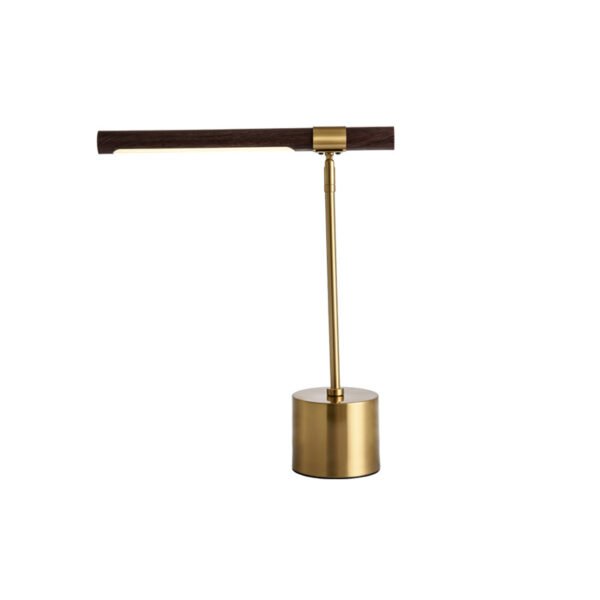
- Task Lighting: This is targeted light for specific activities, like reading, cooking, or applying makeup. Examples include bedside lamps, under-cabinet lights in the kitchen, or desk lampsin home offices.
- Accent Lighting: This adds “wow factor” by highlighting decor—think wall sconces next to a painting, LED strip lights behind a TV, or string lights around a bookshelf.
Example of layered lighting in a living room: Ambient light from recessed downlights + task light from a floor lamp next to the couch (for reading) + accent light from LED strips under the coffee table (for night-time ambiance).

Room-by-Room Lighting Guide (No More Guesswork!)
Every room has different needs—you wouldn’t use the same lighting in a kitchen (where you need precision) as in a bedroom (where you need relaxation). Here’s exactly what to choose for each space.
1. Living Room: Balance Comfort and Function
The living room is where you watch TV, host friends, read, and nap—so lighting needs to be flexible.
- For small living rooms (< 20㎡/215 sq ft):
- Ambient light: A flush-mount ceiling light (1,500–2,000 lumens, 3000K) to fill the space without feeling overwhelming.
- Task light: A floor lamp with an adjustable head (800–1,200 lumens, 3000K) next to the couch—position it so the light hits your book or laptop, not your eyes.
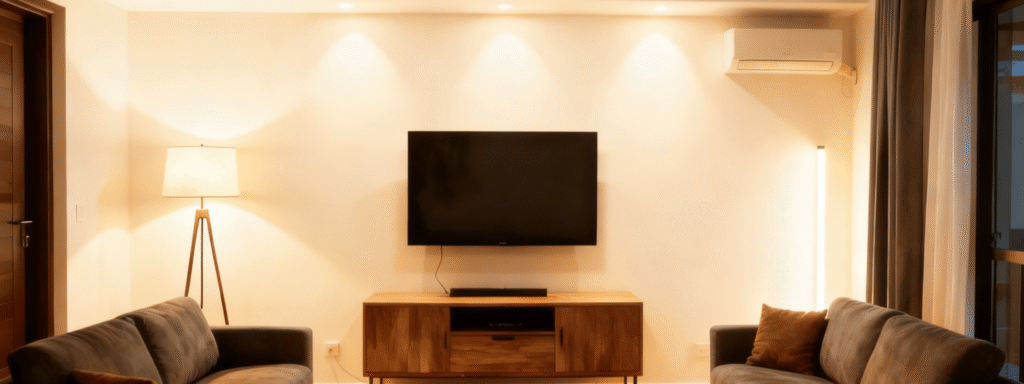
- Accent light: LED strip lights (warm white, dimmable) behind the TV or along the bottom of a bookshelf—they reduce eye strain when watching TV at night and add coziness.
- For large living rooms (> 20㎡/215 sq ft) or open-concept spaces:
- Ambient light: Magnetic track lights (2,000–3,000 lumens total, 3500K) or recessed downlights (6–8 lights, 800 lumens each, 3500K)—they distribute light evenly without cluttering the ceiling.
- Task light: Two table lamps(one on each end of the sofa, 600–800 lumens, 3000K) for casual reading or conversation.
- Accent light: A statement pendant light (like a glass orb or woven rattan design) above a coffee table—choose one with a dimmer switch so you can lower the light for movie nights.
Pro tip: Install a dimmer switch for your main ambient light. Dimming the light by 50% can make the room feel instantly cozier—perfect for date nights or lazy Sundays.
2. Bedroom: Prioritize Relaxation (No More Blinding Mornings!)
The bedroom should feel like a sanctuary, so avoid bright, harsh lights. Here’s how to get it right:
- Main light: Skip the bright ceiling light! Instead, use a semi-flush-mount light (1,000–1,500 lumens, 2700K) with a diffuser (a frosted glass cover) to soften the light. If you hate overhead lights, try four recessed downlights (600 lumens each, 2700K) placed in the corners—they cast a gentle, even glow.
- Bedside lighting: This is non-negotiable. Choose either:
- Wall sconces: Install them 15–20cm (6–8 inches) above your mattress and 30cm (12 inches) from the edge of the bed. They free up nightstand space and cast a soft light—great for reading. Look for sconces with a swing arm so you can adjust the direction.
- Table lamps: Pick lampswith a shade that covers the bulb (to avoid glare) and place them on nightstands that are 70–80cm (28–32 inches) tall—so the light hits your book, not your face. Choose dimmable bulbs (600–800 lumens, 2700K) so you can turn the light down as you fall asleep.
- Accent light: LED strip lights (warm white) under the bed frame—they’re perfect for midnight trips to the bathroom (no more turning on the main light and waking up your partner!).
Avoid this: Ceiling lights with exposed bulbs or high-wattage (over 2,000 lumens) bulbs—they’ll blind you when you wake up in the morning.
3. Kitchen: Bright, Even Light (No More Chopping in the Dark!)
The kitchen is a high-function space—you need light for chopping, cooking, cleaning, and reading recipes. Here’s how to eliminate shadows:
- Ceiling light: Recessed downlights are the best choice—they’re easy to clean (important for greasy kitchens!) and distribute light evenly. Install 1 light for every 4–6㎡ (43–65 sq ft) of space, each with 800–1,000 lumens and 4000K (neutral white). Make sure they’re IP44-rated (waterproof) if your kitchen has a stove with a hood (to resist steam).
- Under-cabinet lighting: This is a game-changer! Install LED strip lights or linear lights under upper cabinets—they illuminate the countertop, so you don’t have shadows when chopping veggies. Choose 800–1,200 lumens per meter and 4000K (neutral white). Look for adhesive, battery-powered options if you’re renting (no hardwiring needed!).
- Pendant lights: If you have an island or a breakfast nook, add 1–2 pendant lights above it. They add style and provide extra task light for eating or prepping food. Choose pendants with a metal or glass shade (easy to wipe clean) and 800–1,000 lumens each, 4000K.
Pro tip: Avoid hanging pendant lights too low over the island—they should be 75–85cm (30–33 inches) above the countertop, so you don’t hit them when reaching for items.
4. Bathroom: Bright, Flattering Light (No More Makeup Disasters!)
Bathrooms need light that’s bright enough for grooming but not so harsh that it makes you look tired. Here’s the key: avoid shadows on your face.
- Ceiling light: A flush-mount ceiling light (1,500–2,000 lumens, 4000K) with an IP44 or higher rating (waterproof—critical for steam from showers). If your bathroom is large (> 8㎡/86 sq ft), add 2–3 recessed downlights (800 lumens each, 4000K) for extra brightness.
- Mirror lighting: This is the most important part! Never install a single light above the mirror—it will cast shadows under your eyes, nose, and chin (making you look older or tired). Instead:
- Wall sconces: Install 2 sconces, one on each side of the mirror, at eye level (150–160cm/59–63 inches from the floor). Each sconce should be 600–800 lumens, 4000K, and have a frosted glass shade (to avoid glare).
- LED mirror: If you’re short on space, buy a mirror with built-in LED lights around the edges. Look for one with adjustable brightness and color temperature—you can switch to warm white for relaxing baths and neutral white for makeup application.
- Shower light: If your shower doesn’t have a window, install a waterproof recessed light (IP65-rated) inside the shower. Choose 800 lumens and 4000K—bright enough to see, but not so bright that it’s harsh.
Avoid this: Cool white light (5000K+) in the bathroom—it can make your skin look sallow and makeup look mismatched.
Trendy Ambient Lights to Elevate Your Space
You don’t need to spend a fortune to add style to your home—these trendy ambient lights are affordable, easy to install, and perfect for renters.
1. Sunset Lamps: Bring the Beach Indoors
Sunset lamps (also called “sunset projectors”) have taken social media by storm—and for good reason. They project a warm, orange-pink glow onto walls or ceilings, mimicking the look of a sunset. They’re perfect for:
- Bedrooms: Turn it on 10 minutes before bed to wind down—studies show warm light helps regulate melatonin (the sleep hormone).
- Living rooms: Use it as accent light during movie nights or dinner parties—it adds a romantic, vacation-like vibe.
How to choose: Look for a lamp with adjustable angle and brightness. Brands like Amazon Basics or TaoTronics sell affordable options (
20–40) that plug into a USB port (easy to use with a power bank for outdoor spaces, too).
2. Fishing Floor Lamps: Stylish and Functional
Fishing lamps (named for their long, flexible “arm” that looks like a fishing rod) are a favorite among interior designers. They’re sleek, modern, and super functional—you can bend the arm to direct light exactly where you need it.
Best for:
- Living rooms: Place one next to a reading chair—adjust the arm so the light hits your book, not your eyes.
- Home offices: Use it as a task light next to your desk—its narrow design doesn’t take up much space.
Style tip: Choose a lamp with a black or brass finish for a modern look, or a wooden base for a bohemian vibe.
3. Smart Fairy Lights: Customize Your Ambiance
Gone are the days of plain white string lights—smart fairy lights let you change colors, brightness, and even sync with music or movies. They’re perfect for:
- Bedrooms: Drape them around your headboard or mirror—use the app to switch to soft pink at night or bright blue for a party.
- Balconies/Patios: Hang them around railings—most are waterproof (IP65-rated), so they can withstand rain.
Top picks: Philips Hue Smart String Lights (79.99)work with Alexa, Google Home, and Apple HomeKit — you can control them with your voice or phone. If you’re on a budget, Go vee Smart LED String Lights(39.99) offer similar features at half the price.
4. Projection Lamps: Turn Your Walls into Art
Projection lamps (also called “galaxy lamps”) project patterns like stars, oceans, or forests onto your walls and ceiling. They’re great for:
- Kids’ rooms: A star projection lamp can help kids fall asleep—many have a “timer” function that turns off after 30 minutes.
- Bedrooms: A ocean wave projection lamp adds a calming vibe—perfect for anyone who loves the beach.
Pro tip: Choose a lamp with a dimmable switch—you don’t want the projection to be too bright when you’re trying to sleep.

Sustainable Lighting Trends (Save Money and the Planet)
Lighting accounts for about 15% of a home’s electricity use—so choosing energy-efficient options not only helps the planet but also saves you money on bills. Here are the top sustainable lighting trends to try:
1. LED Bulbs: The Gold Standard
LED (Light-Emitting Diode) bulbs are the most energy-efficient option on the market. They use 75–80% less energy than incandescent bulbs and last 25–50 times longer. For example:
- A 60-watt incandescent bulb costs ~$7 per year to run (if used 4 hours a day) and lasts 1 year.
- A 9-watt LED bulb (equivalent to 60 watts) costs ~$1 per year to run and lasts 20 years.
How to choose: Look for bulbs with the “Energy Star” label—they meet strict energy-efficiency standards. Avoid cheap, unbranded LEDs—they often dim quickly or burn out after a few months. Top brands include Philips Hue, Cree, and GE.
2. Solar-Powered Lighting: Perfect for Outdoor Spaces
Solar-powered lights use energy from the sun, so they don’t add to your electricity bill. They’re ideal for:
- Gardens: Solar path lights (like those from Sunforce or Hampton Bay) illuminate walkways at night—no wiring needed.
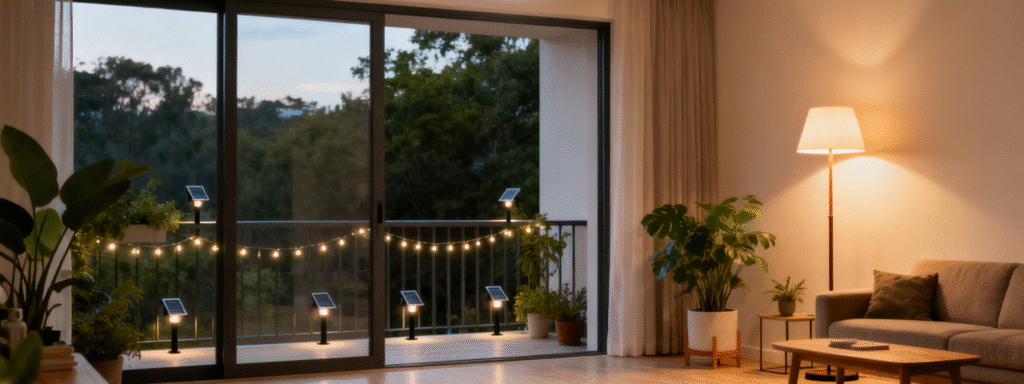
- Balconies: Solar string lights or pendant lights (like the ones from Brightech) add ambiance without plugging into an outlet.
Pro tip: Place solar lights in areas that get at least 6 hours of direct sunlight per day—this ensures they charge fully and stay on all night.
3. Smart Lighting Systems: Control Energy Use
Smart lighting systems (like Philips Hue, Samsung SmartThings, or Lutron) let you control your lights from your phone or voice assistant. You can:
- Turn off lights remotely (great if you forget to turn them off when leaving home).
- Set schedules (e.g., turn on the living room light at 6 PM and off at 11 PM).
- Dim lights automatically (reduces energy use by up to 50%).
Bonus: Many smart systems integrate with other smart home devices—for example, you can set your lights to turn on when your front door unlocks, or turn off when you leave the house.
Final Thoughts: Lighting Is About More Than Brightness
At the end of the day, lighting is about creating a space that feels like you. It’s the difference between a living room that feels cold and a living room where you want to curl up with a book. It’s the difference between a bathroom where you dread doing your makeup and one where you feel confident.
Whether you’re on a budget or willing to splurge, the tips in this guide will help you transform your home—one light at a time. Do you have a specific room you’re struggling with? Or a favorite lighting trend you want to try? Share in the comments below—I’d love to hear your thoughts!
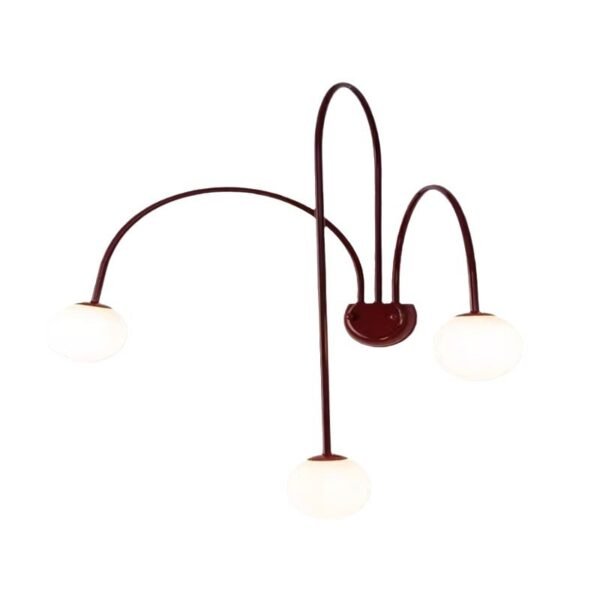
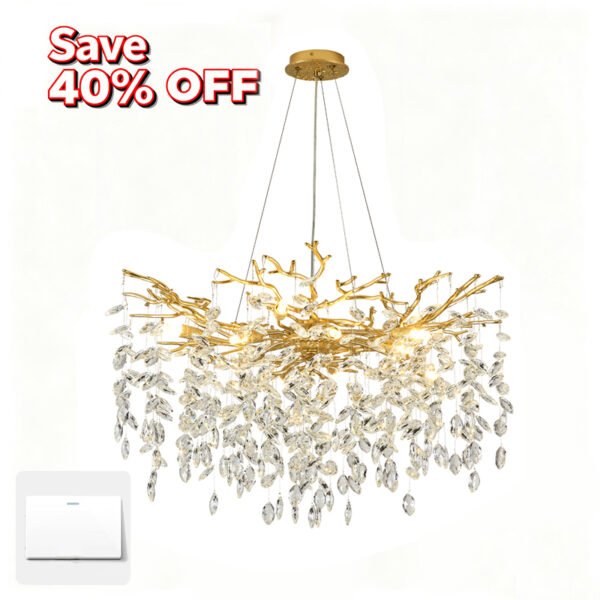
Gold tree branch crystal chandelier circular raindrop design with luxury crystals
$138.00 – $342.00价格范围:$138.00 至 $342.00FAQs About Home Lighting (Answered by Experts)
A: LED bulbs typically last 25,000–50,000 hours. If you use a bulb 4 hours a day, that’s 17–34 years! You’ll only need to replace them if they start dimming or flickering.
A: Yes! Most LED bulbs are designed to fit standard sockets (E26/E27, the most common size). Just make sure the bulb’s wattage is compatible with the fixture (most fixtures can handle LED bulbs, even if they say “max 60 watts”—LEDs use far less energy).
A: Layered lighting is key. Use:
- Ambient light: Recessed downlights (800 lumens each, 4000K) or a ceiling light (1,500–2,000 lumens, 4000K).
- Task light: A desk lamp with adjustable brightness (800–1,200 lumens, 4000K)—position it to the side of your laptop (not directly in front) to reduce glare.
- Avoid backlighting (like a window behind your laptop)—it can cause eye strain.
A: Use light colors (white or light gray) on walls and ceilings, and choose fixtures that reflect light (like glass or metallic shades). Add LED strip lights along the top of baseboards or under cabinets—they create the illusion of more space by “lifting” the walls.
You explained this so clearly. I finally get it.
I’m very glad to help you solve your doubts.